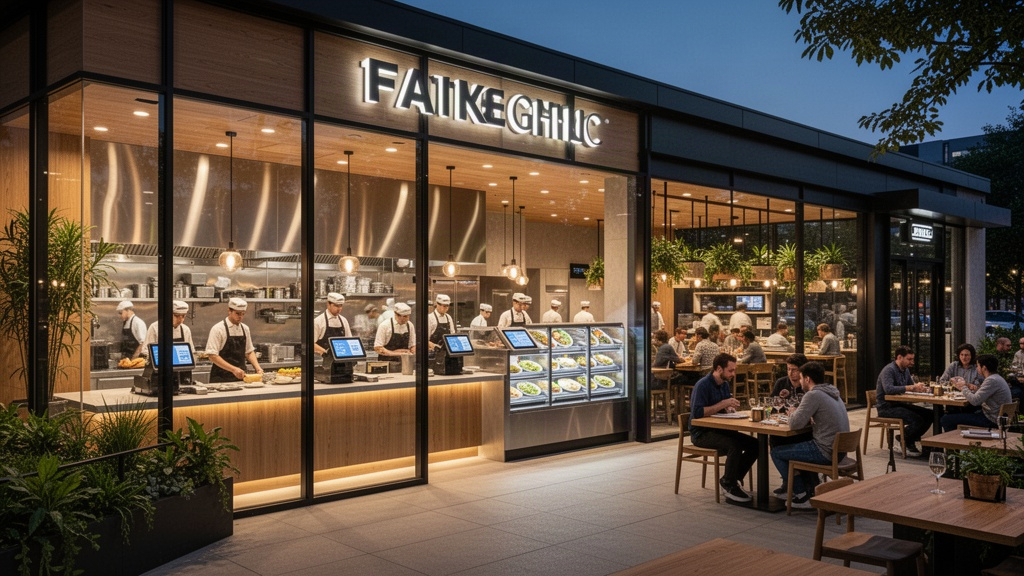
The restaurant chain industry sits at a fascinating crossroads. Consumer expectations have shifted sharply, cost pressures have intensified, and digital ordering has moved from novelty to baseline expectation. Against this backdrop, the gap between chains that thrive and those that stagnate has widened considerably. What separates them is rarely a single factor. Successful chains tend to excel across several dimensions simultaneously: brand clarity, operational discipline, digital capability, financial resilience, and the ability to adapt without losing their identity. The National Restaurant Association estimates the U.S. foodservice market generates revenues approaching $1 trillion annually, which signals enormous opportunity — and equally fierce competition. Understanding what drives sustainable performance in this sector matters for operators, investors, and franchise candidates alike.
- A clearly defined value proposition that resonates with a specific customer segment
- Operational consistency across every location, regardless of ownership model
- Strong unit economics with a realistic return on investment per site
- Digital integration covering mobile ordering, loyalty programs, and delivery
- Menu engineering that balances customer appeal with profitability
- Talent retention and training systems that maintain service quality at scale
- Adaptability to local preferences without fragmenting the brand
What defines a successful restaurant chain today
Success in the restaurant chain sector is not simply about the number of locations open. A chain with 2,000 underperforming units is in worse shape than one with 400 profitable, well-run restaurants. The metrics that matter most are same-store sales growth, average ticket value, customer return rate, and restaurant-level margin. These indicators reveal whether a brand is genuinely connecting with customers or just expanding its footprint while diluting its quality.
A clear value proposition sits at the foundation of every durable chain. Chipotle Mexican Grill built its identity around visible ingredient quality and customizable bowls at an accessible price point. Domino's Pizza invested heavily in delivery speed and digital ordering infrastructure. Both made deliberate choices about what they stood for — and executed those choices relentlessly. Chains that try to be everything to everyone tend to become nothing in particular.
Adaptability matters just as much as consistency. Consumer priorities have shifted toward perceived value, dietary transparency, and convenience. A chain that locked in its menu and service model a decade ago without revisiting either is likely losing ground. The most resilient operators review their positioning regularly, not to chase trends, but to ensure their offer still matches the expectations of their core customers.
Regulatory and cost environments also shape what "success" looks like. Labor costs, food costs, occupancy expenses, and third-party delivery commissions each exert pressure on margins. The chains that manage these variables well — through supply chain contracts, labor scheduling technology, and smart site selection — tend to outperform peers even when macroeconomic conditions tighten.
A distinctive brand built around customer value
Brand strength in the restaurant sector goes well beyond a recognizable logo. It lives in the consistency of the customer experience, the emotional associations a name carries, and the degree to which a chain earns genuine preference rather than mere convenience. McDonald's and Starbucks have both demonstrated that a strong brand can weather significant operational challenges precisely because customers have a deep, habitual relationship with them.
Read also: How are aerospace companies enhancing passenger safety
Perceived value is the central battleground. This does not mean being cheap. It means delivering an experience — whether a $6 coffee or a $15 sandwich — that feels worth the price paid. Menu engineering plays a direct role here: smart chains analyze which items drive traffic versus which generate the highest margin, then structure their menus to guide customers toward profitable choices without creating friction.
Visual identity and in-store atmosphere contribute more than operators sometimes acknowledge. A coherent design language across packaging, signage, uniforms, and digital interfaces signals professionalism and builds trust. When a customer walks into any location of a well-run chain, the experience should feel familiar within seconds. That familiarity is a form of promise — and breaking it, even once, erodes confidence.
Chains that earn genuine brand preference also tend to generate word-of-mouth and social media visibility organically. Customers who feel a brand reflects their values — whether around sustainability, ingredient sourcing, or community involvement — become advocates. That advocacy is worth far more than any paid advertising campaign.
Operational consistency without losing local relevance
Scaling a restaurant concept is an operational challenge of the highest order. Every new location introduces variables: different staff, different suppliers, different customer demographics. The chains that manage this well have invested in standardized training systems, detailed operations manuals, and supply chain partnerships that deliver consistent ingredients regardless of geography.
Yum! Brands, which operates KFC, Pizza Hut, and Taco Bell across more than 150 countries, has built its entire expansion model around replicable systems. Franchisees receive detailed playbooks covering everything from food preparation timelines to customer greeting scripts. This standardization protects the brand while allowing individual operators to run their businesses efficiently.
Read also: What is financial education: empowering your employees effectively
Technology now plays a significant role in maintaining consistency at scale. Kitchen display systems, automated inventory tracking, and labor scheduling software reduce the reliance on individual judgment for routine decisions. When a manager in one location can see real-time data on food waste, table turnover, or order accuracy, they can correct problems before they become patterns.
Local relevance is the necessary counterbalance to standardization. A chain that serves the same menu in Tokyo as in Texas is ignoring powerful consumer signals. The most sophisticated operators build menu localization into their franchise agreements, allowing regional variations within defined parameters. This approach respects local tastes without fragmenting the brand identity.
Digital convenience, data and loyalty
The shift toward digital ordering has fundamentally changed the competitive dynamics of the restaurant chain sector. Chains that built robust mobile ordering platforms early — Domino's being the most cited example — gained a structural advantage that proved difficult for competitors to close quickly. Today, digital ordering is not a differentiator; it is a baseline expectation. The differentiation now comes from how well a chain uses the data that digital channels generate.
Loyalty programs have become one of the most effective tools for driving repeat visits and increasing average spend. Starbucks Rewards remains a benchmark: it combines purchase tracking, personalized offers, and gamified incentives into a system that keeps customers engaged between visits. The program generates data that feeds back into menu decisions, promotional timing, and store-level staffing.
Delivery partnerships with platforms like DoorDash and Uber Eats extend reach but come at a cost. Commission structures vary by contract and market, and they can meaningfully compress restaurant-level margins. Chains that have developed proprietary delivery channels — or negotiated favorable platform terms through volume — protect more of their revenue. The omnichannel restaurant experience is now a genuine strategic asset: customers who engage with a brand across multiple channels (app, dine-in, drive-through, delivery) tend to visit more frequently and spend more per visit.
Read also: The Do's and Don'ts of How to Start Investing Stocks Effectively
Data responsibility is no longer optional. Customers are increasingly aware of how their information is collected and used. Chains that handle customer data transparently, in compliance with applicable privacy regulations, build trust that translates into loyalty.
Profitable growth and resilient expansion
Growth for its own sake destroys value. The restaurant chains that have built durable businesses understand that every new opening must make financial sense on its own terms. Unit economics — the analysis of revenue, direct costs, margin, initial investment, and payback period for a single location — determine whether a chain can scale profitably or whether it is simply spreading losses across more addresses.
Site selection has always mattered, but the criteria have evolved. Traffic counts and demographic profiles remain relevant, but chains now also evaluate proximity to residential delivery zones, parking configurations for drive-through efficiency, and lease flexibility that allows adaptation as consumer habits shift. A poorly chosen location can underperform for years before a brand is willing to close it, dragging down system-wide averages.
The franchise model offers a path to rapid expansion with reduced capital exposure for the franchisor. Restaurant Brands International, which owns Burger King, Tim Hortons, and Popeyes, operates primarily through franchised units. This structure transfers operational risk to franchisees while the parent company collects royalties and enforces brand standards. The trade-off is a reduced ability to implement rapid changes across the network — franchisees must be persuaded, not simply instructed.
Resilience in expansion also means knowing when not to open. Chains that over-expanded during periods of cheap credit and favorable lease terms often found themselves trapped with underperforming locations when conditions tightened. The discipline to say no to a marginal site — even when capital is available — separates operators who build lasting businesses from those who chase growth metrics at the expense of long-term profitability. Sustainable restaurant chains are built location by location, decision by decision, with financial discipline as the constant thread.